

Retail arbitrage sellers often lose time to the same Facebook Marketplace questions: whether an item is available, what condition it is in, where pickup happens, and whether the price is flexible. A useful reply system makes those answers faster without pretending that every Marketplace conversation should be automated. The safest approach is to organize verified listing facts, prepare human-reviewed response blocks, and define when a buyer should be handed to a supported business messaging workflow.
The distinction matters because a Marketplace listing chat carries item-specific context. A Page or business inbox has different permissions and a different relationship with the customer. Sellers who understand that boundary can respond quickly while still reviewing payment, identity, meeting, and negotiation details. For a detailed explanation of the channel boundary, the Facebook Marketplace bots guide separates listing replies from supported Page follow-up.
Start With a Listing Record, Not a Generic Script
A reply can only be as accurate as the listing information behind it. Create a small record for every item with the exact title, SKU or identifier, acquisition cost, current price, minimum approved price, condition, dimensions, included accessories, known defects, pickup area, shipping options, and current availability. If the item has a warranty, return limit, or testing result, record that too.
This same discipline helps with the broader retail records that owners should maintain. The checklist in retail inventory records owners should prepare shows why item-level accuracy supports both daily operations and future business diligence. A Marketplace response should pull from that verified record rather than from memory.
- Use one canonical item name in the listing and reply library.
- Update availability as soon as an item is pending or sold.
- Keep condition notes consistent with the photographs.
- Separate the asking price from the lowest approved price.
- Review pickup and shipping language when policies change.
Build Reply Blocks Around Real Buyer Intent
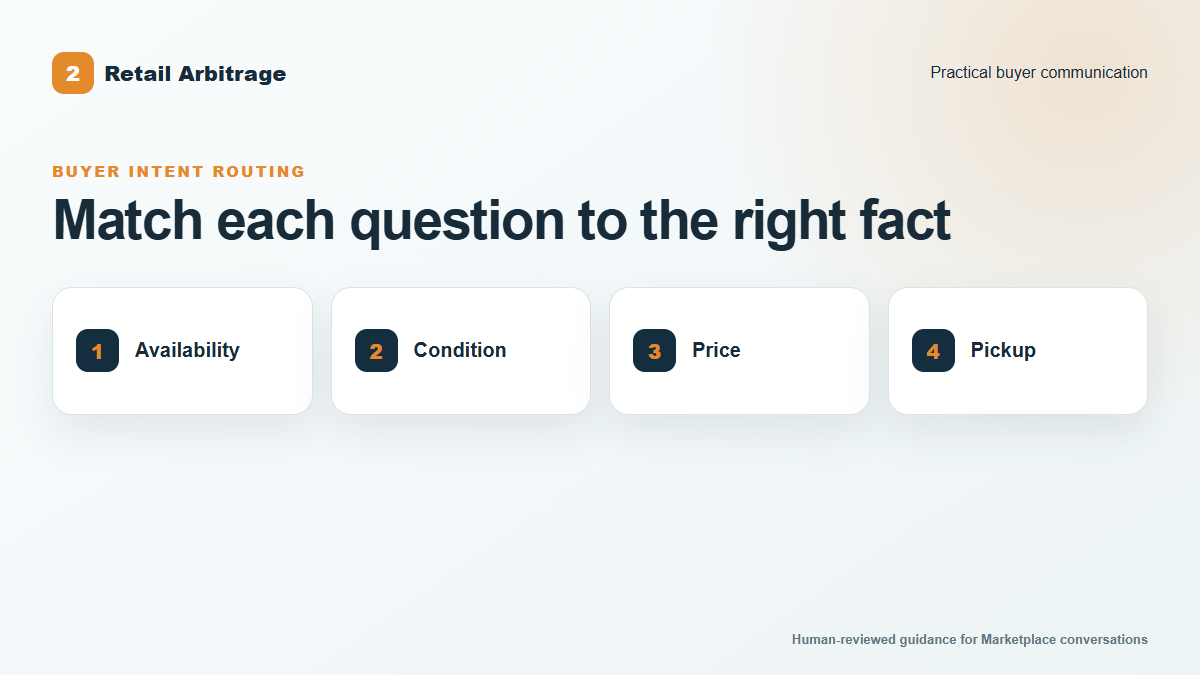
Most messages fall into a small number of intent groups. Availability questions need a current status and one useful detail. Condition questions need the exact flaw, test, or photo reference. Price questions need a clear policy. Pickup questions need a general area and safe scheduling step. Shipping questions need verified boundaries and costs. A seller can prepare a short block for each group without making it an automatic final answer.
A strong block contains the answer, a relevant detail, and one next action. “Yes, the blue mixer is available. It has been tested and the bowl has the scratch shown in photo five. Would you like the Saturday pickup windows?” is more useful than a generic confirmation. The seller still verifies the listing before sending it.
| Buyer intent | Verified input | Human review |
|---|---|---|
| Availability | Current listing status | Confirm it was not sold elsewhere |
| Condition | Photos and inspection notes | Match answer to the exact unit |
| Price | Asking price and approved range | Approve exceptions |
| Pickup | General area and time windows | Protect private location details |
| Shipping | Supported method and cost | Review unusual destination requests |
Keep Marketplace and Business Follow-Up in Separate Lanes
Meta documents Marketplace buyer-and-seller messages separately from Page instant replies and Meta Business Suite Inbox automations. Sellers should therefore answer the listing question where it began. A buyer should not have to change channels just to learn whether an item is available.
A business handoff becomes useful when the question expands beyond the listing. A repeat buyer may want help comparing several products, locating future inventory, or scheduling a service. Explain why the business channel helps and let the buyer choose it. Do not imply that the original Marketplace conversation will automatically transfer or that a Page tool controls a personal listing thread.
The same discipline applies when evaluating software claims. The article on using bots on Messenger is a useful reminder to verify the actual channel and use case instead of treating every kind of messaging as one surface.
Set Stop Rules for Payments and Safety
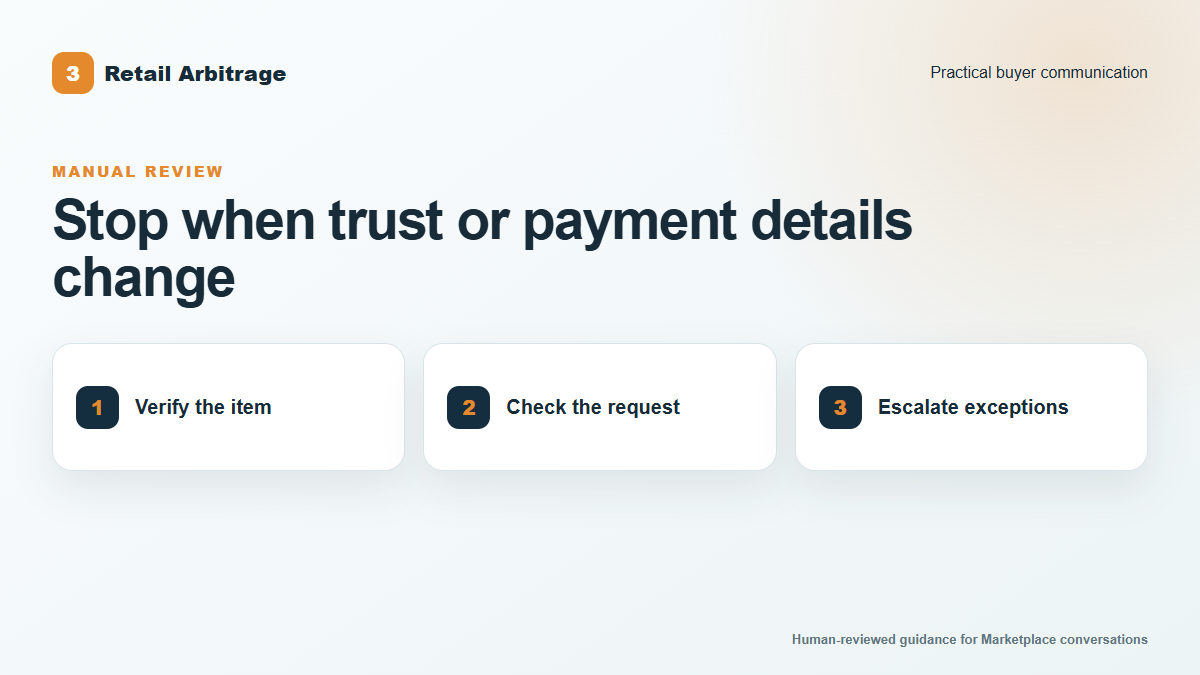
Speed should never overrule trust checks. A conversation needs a person when the buyer changes the payment method, asks for a verification code, requests an overpayment or refund, sends an unexpected link, changes the meeting person, or pressures the seller to skip ordinary checks. The reply system should make escalation easier, not try to resolve every unusual request.
- Pause the conversation and review the listing history.
- Confirm the agreed item, amount, buyer, and next step.
- Keep sensitive details out of broad team notes.
- Use Meta’s reporting or blocking controls when appropriate.
- Document the reason for the handoff so another team member can continue safely.
Use respectful language. “I need to verify that request before we continue” protects the seller without accusing a legitimate buyer. A safe system distinguishes a missing detail from a genuine warning signal.
Measure Useful Replies, Not Message Volume
The goal is a correct next step, not the largest number of sent messages. Track the time to the first useful answer, accuracy corrections, unresolved conversations, manual-review rate, and completed transactions. Review a sample of conversations to see whether the reply matched the listing and whether the buyer understood what to do next.
Recurring questions should improve the listing itself. If buyers repeatedly ask for dimensions, add them to the description. If condition questions dominate, add a closer photo. If pickup timing causes confusion, clarify the general area and available windows. Better listings reduce repetitive messages before any reply tool is involved.
For sellers managing many units, compare these communication measures with inventory and cash-flow records. The guide to checking cash flow, inventory, and seller claims shows why operational facts should agree across customer conversations and business records.
Assign one person to review the reply library each week and another to spot-check a small conversation sample. The owner should remove expired pickup windows, outdated prices, sold inventory, and wording that no longer matches the platform controls visible to the team. The spot check should look for a correct item reference, a useful answer, a clear next action, and an appropriate escalation. This simple separation catches both content drift and execution mistakes. It also gives sellers evidence about which questions deserve a better listing photograph, a clearer description, or a new internal process. The reply system becomes a feedback loop for merchandising and operations, not merely a way to send messages faster.
Frequently Asked Questions
Can I automate every Facebook Marketplace reply?
Do not assume that a Page messaging tool controls personal Marketplace listing threads. Use verified reply blocks with human review, then use supported business messaging only when the buyer chooses that channel and the account supports it.
What should an availability reply include?
Confirm the exact item, current status, one useful condition or logistics detail, and one clear next action. Check the record before sending the reply.
When should a seller stop using a template?
Stop when the request involves payment changes, identity, verification codes, private location details, disputes, unusual links, price exceptions, or facts that conflict with the listing.
How often should reply blocks be reviewed?
Review them whenever inventory, pickup, shipping, pricing, or platform controls change. Give each block an owner and a last-reviewed date.
