

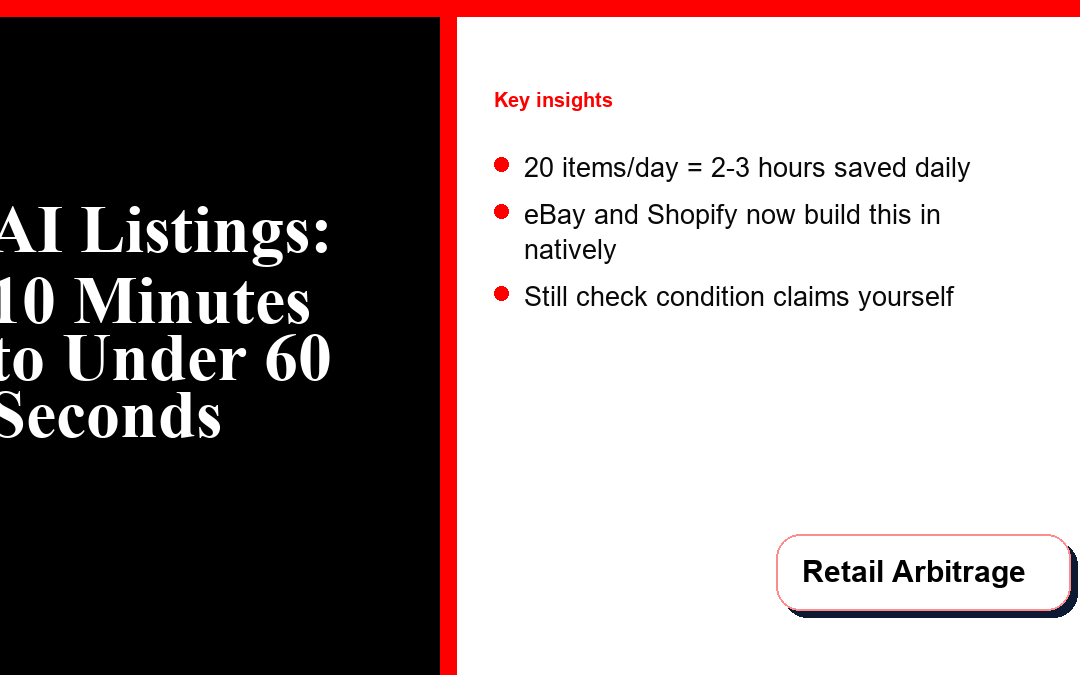
Writing a product description used to eat 8 to 10 minutes per listing — title, condition notes, measurements, a description that doesn’t read like every other listing in the category. AI tools built for this specific job have cut that to under a minute for most resellers, and for anyone listing in volume, that difference adds up to real hours back every week.
The Actual Time Math
A reseller listing 20 items a day at the old 8-10 minute pace is spending roughly 3 hours daily just on descriptions. At under a minute per listing with AI assistance, that same volume drops to well under 20 minutes — 2 to 3 hours reclaimed daily, every single day, not a one-time efficiency bump. Sellers using these tools consistently report listing two to three times faster than manual writing allows.
What These Tools Actually Do
The strongest tools in this category combine several jobs that used to be separate steps: generating the title and description together so they’re consistent, producing or cleaning up product photos, removing backgrounds, and in some cases cross-listing the same item to multiple marketplaces from one input. Platform-native tools — Shopify’s built-in AI description generator, for instance — require no extra subscription and integrate directly into the listing flow a seller already uses.
Where This Is Heading
Major marketplaces have moved past treating AI-generated listings as a novelty — both eBay and Shopify now build AI listing assistance directly into their core tools, which means the comparison for most resellers isn’t “AI tool vs. no AI tool” anymore, it’s “which AI tool is actually built into the platform I’m already using.”
What Still Needs a Human Eye
- Condition accuracy. AI can draft the description, but a reseller still needs to verify condition claims match the actual item — a wrong condition note is a return and a bad review waiting to happen.
- Category-specific details buyers actually search for. A generic AI description misses the specific terms serious buyers in a niche category search by; a quick review catches gaps a template misses.
- Brand and platform policy compliance. Some categories and brands have specific listing requirements an AI tool won’t automatically know to follow.
Tools built around a full content pipeline — research, draft, and publish staying connected rather than living in separate apps — extend this efficiency beyond just the description itself. Charigent’s e-commerce content tools are built around that same connected-workflow model.
The Bottom Line
For anyone listing more than a handful of items a week, AI-assisted descriptions aren’t an experiment anymore — they’re the standard, and the resellers still writing every listing manually are spending real hours on a problem that’s already solved.
