

For many online sellers looking to diversify their income streams, Messenger earning bots have recently generated significant interest. However, before search queries for a mathbot login start cluttering your browser history, it is crucial to perform due diligence. Automated chat platforms are frequently promoted as low-barrier side hustles. While some function as harmless marketing tools, others operate as low-paying engagement loops or outright scams. As a side hustler, your time is your most valuable asset. Spending hours on chat scripts only to realize you cannot withdraw earnings is a major setback. Therefore, establishing a systematic method to evaluate these tools is essential before committing your time, personal details, or capital.
When evaluating these systems, it is easy to get swept up in promises of automated income. Many platforms claim to pay users for solving equations or clicking ads. For an e-commerce seller accustomed to calculated risks, these activities might sound like simple ways to generate minor cash flow. However, the online ecosystem is filled with security pitfalls. Developing a healthy skepticism is a practical business practice that protects your digital assets and safeguards your personal information from bad actors.
Analyzing the Real Risks of “Free Registration” and Personal Data Harvesting
Many automated chat programs lure participants by advertising “free registration.” While it is true that you might not be asked to pay an entry fee upfront, this does not mean the registration is free of risk. In the digital space, data is a highly valuable commodity. When you connect your social media profile to an unverified bot, you often grant permission for the system to access your public profile, email address, phone number, and friend list. Malicious actors launch these systems specifically for data harvesting, collecting active contact details to sell to third-party databases, launch targeted phishing attacks, or send unsolicited spam.
Furthermore, free registration is frequently the first step in a multi-layered task scam. After joining, users are typically instructed to watch advertisements, share promotional links, or subscribe to external channels under the promise of accumulating credits. In many cases, these points can only be cashed out once they reach a very high threshold. As users approach this threshold, the rules of the system often change, or the bot stops responding. The bot may also demand that users recruit a certain number of active friends before a withdrawal is permitted. This turns the user into an unpaid promoter, expanding the reach of the bot to new targets. When considering these automated platforms, you might ask, can you use bots on Messenger under Facebook’s official policies?
The answer is yes, but developers should follow the Facebook Messenger Platform Policy, which prohibits deceptive practices, automated spam, and actions that compromise user security. Bots that engage in aggressive recruiting schemes or force users to spam their contact lists violate these platform rules and are regularly banned by Meta. When a bot is shut down for policy violations, any virtual earnings accumulated within its interface can disappear quickly. Therefore, relying on automated platforms that operate on the fringes of platform policies is highly risky for side hustlers.
The Side-Hustler’s Cost-Benefit Analysis: Bots vs. Resell Margins
To evaluate whether a Messenger bot is worth your time, it is useful to apply the same financial analysis you would use for a traditional business. In retail arbitrage, sellers source products from retail outlets or online clearance sections and resell them at a markup. A standard arbitrage operation involves calculating clear metrics: the cost of goods, shipping expenses, platform fees, and packaging costs. This allows the seller to determine a realistic resale margin and project a precise hourly wage based on the time spent sourcing, listing, and shipping products. Even a beginner can expect to make a tangible profit margin per item, with the potential to scale.
In contrast, the earning potential of Messenger bots is exceptionally low compared to the time invested. Many of these platforms pay micro-cents per task. For example, if a bot pays a fraction of a cent per task, a user would need to complete hundreds of actions just to earn a single dollar. If each task takes 30 seconds, that equates to hours of continuous work for one dollar–representing an hourly rate far below minimum wage. When you factor in the cost of internet connectivity, electricity, and the physical wear on your devices, the net return is often negative. From an opportunity cost perspective, the time spent clicking buttons on a bot could be far better utilized learning e-commerce fundamentals or building a physical inventory.
Many professional sellers also leverage advanced tools to scale their business, such as automated listings or copywriting software. For instance, some sellers use what they consider the best AI writer to quickly draft product descriptions, optimize blog posts, or generate social media marketing copy, saving hours of manual writing. Using technology to automate a legitimate business that yields high resale margins is a productive use of automation. On the other hand, spending hours manually serving as the workforce for a bot’s low-value traffic generation represents a poor return on investment. Before engaging with any earning bot, run a simple comparison of its projected hourly rate against the realistic earnings of established side hustles.
How to Identify Legitimacy Signals Before You Share Data or Fees
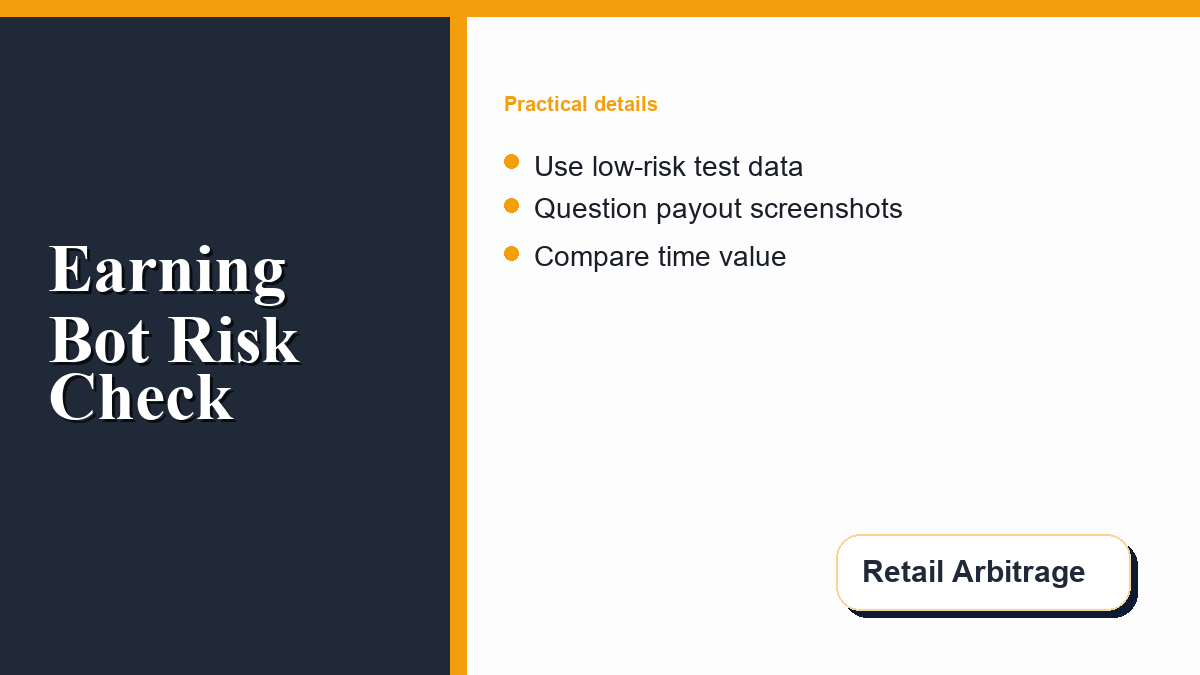
Identifying whether a bot is a legitimate utility, a low-value engagement trap, or a direct security risk requires careful inspection of the signals it presents. A major warning sign is the reliance on screenshots as proof of payout. In online communities, promoters frequently post cropped screenshots showing GCash or bank transfers as “proof” that a bot pays. However, digital screenshots are incredibly easy to fabricate. Using basic browser inspection tools, a user can modify the text on a webpage in seconds to show any balance or transaction amount. Similarly, image editing software can create realistic-looking receipts with minimal effort. Therefore, community-shared screenshots should not be accepted as sole proof of legitimacy.
Before registering or testing any chat-based earning system, you should check online analysis to see if other users have verified the system’s credentials. For example, looking up reviews to see if a specific mathbot legit check has been published can save you from committing to a platform that later refuses to pay. Legitimacy checks usually analyze the bot’s history, domain registration, and withdrawal patterns to determine whether the platform is sustainable or merely a short-lived cycle designed to collect user actions. To help you quickly evaluate the platforms you encounter, use the comparison table below to categorize the characteristics of the bot:
| Signal Level | Key Characteristics | Actionable Recommendation |
|---|---|---|
| Green Flags (Low Risk) |
|
Safe to explore or interact with using basic, low-risk interactions. |
| Yellow Flags (Moderate Risk) |
|
Proceed with caution. Use a secondary email, avoid sharing any personal identification, and limit time investment. |
| Red Flags (High Risk) |
|
Stop immediately. Do not share any details, block the bot, and report the associated accounts. |
A Quick Legitimacy Workflow for Side Hustlers
Before engaging with any earning bot, run through this quick legitimacy workflow to protect your time and assets:
- Identify the owner: Look for a registered company name or verified developer page. Anonymous setups are a major risk.
- Check the official page or domain: Verify that the bot is linked from a legitimate domain, not a random chat link.
- Avoid upfront fees: Be skeptical of any request to pay for registration or withdrawal. Review the FTC guidelines on job scams and how to avoid scams.
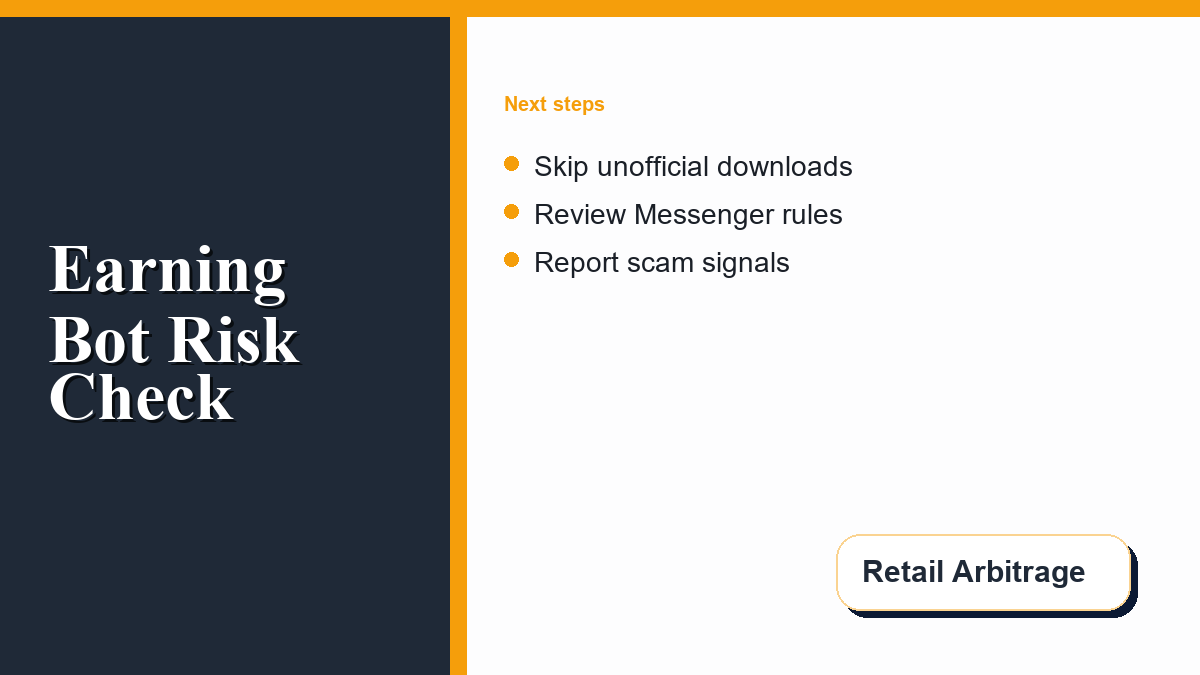
- Avoid APK downloads: Do not install Android Package (APK) files outside official app stores; they may contain malware.
- Check payout proof: Rely on external, third-party verification rather than in-app screenshots.
- Protect financial assets: Avoid sharing bank passwords, GCash MPINs, or OTPs. Consult GCash resources on how to protect your GCash account and how to report a scam to GCash.
- Use a separate email: Register with a secondary email address not linked to your primary financial accounts.
- Test with low-risk information: Avoid entering your home address, primary phone number, or government ID.
- Stop if asked for sensitive credentials: Walk away immediately if the bot demands administrative access or security codes.
Verifying Evolving Security Policies and Safety Guidance
Because digital platform architectures, developer rules, and online scam tactics change rapidly, side hustlers should periodically update their safety knowledge. In 2026, security protocols on major applications are regularly updated to block unauthorized data access and malicious bots. A bot that appears to operate safely today may violate platform rules tomorrow, leading to account suspension or loss of earnings. Verify the latest official guidelines from service providers, and adjust your risk threshold based on current security patterns rather than outdated online discussions.
